
You can now ask artificial intelligence almost anything about yourself. Why do I keep ending up in the same kind of relationship? Why am I afraid to be seen? Why do I put things off? What is my shadow? What is really holding me back?
And it will answer, sometimes brilliantly. It finds words for what you feel, turns years of scattered thoughts into a few clear paragraphs, points out patterns you hadn't noticed and asks questions you wouldn't have thought to ask yourself. For many people this is a real breakthrough.
Then something odd happens. You understand yourself better. You can explain your patterns and say where they came from. You've read the books, kept the journals, asked AI hundreds of questions. And still something doesn't move. The same conversations, the same choices, the same kind of partner, the same things avoided, the same reactions coming from the same place.
This is where self-reflection and transformation part ways.
Who Drew the Map?
AI works with what you bring to it. You choose the question. You decide what to reveal and which parts of your experience to describe, and you interpret the answer. However insightful the response, the exploration still happens largely inside the system you are trying to understand.
You are studying the map you already have.
The more interesting question is what produced that map. Why do you organise your life this way? What rules are operating underneath your decisions? What have you learned to consider normal? What are you protecting, and what are you giving up without even registering it as a loss?
What becomes possible when you stop obeying a rule you never consciously chose?
The Rule Underneath
Take someone who says: "I can't express myself."
There are plenty of possible explanations. Low confidence, fear of judgement, introversion, childhood wounds. AI can help explore every one of them. But underneath there may be something far more specific, a rule like this:
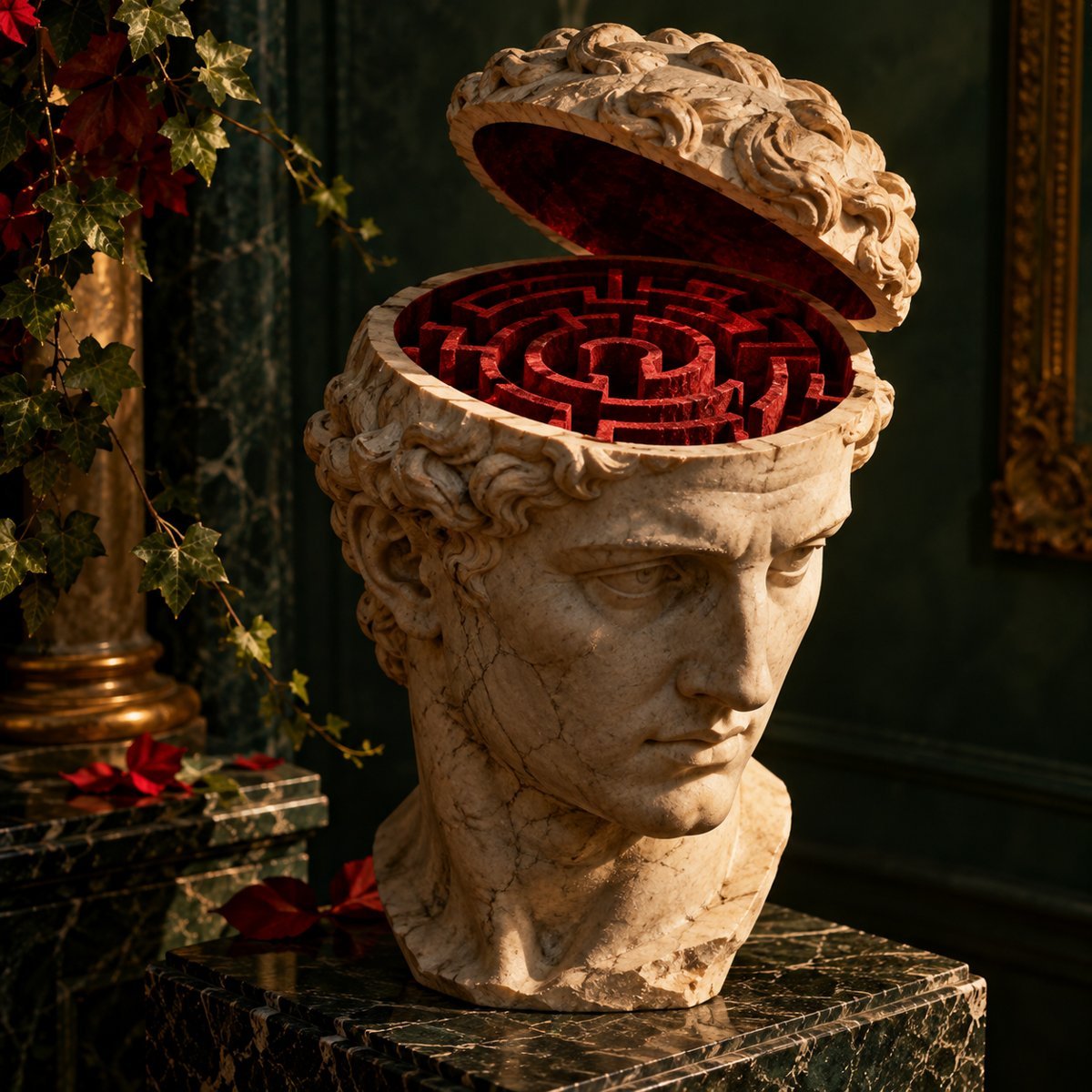
My existence is safe only as long as it doesn't inconvenience anyone.
If that is the operating rule, more confidence won't fix it, because a whole way of moving through life has been organised around a hidden condition. The person can keep improving their communication skills while continuing to suppress the very thing they want to say.
That is the difference between analysing a behaviour and seeing the architecture that produces it.

Where Another Human Being Comes In
I don't see my work as competing with AI, and I don't think technology is the enemy.
My work begins where self-analysis reaches its limit.
I work with what happens between us. I notice where your words and your behaviour don't quite match. The sentence you keep circling around. The contradiction you've learned to explain so convincingly that you no longer recognise it as one. The moment your energy changes. The thing you dismiss too quickly, or intellectualise instead of feeling. The possibility you keep describing but never step into.
AI can reflect your story back to you.
A person can notice how you are creating the story while you tell it.
This matters because change rarely comes from getting the right explanation. Often you already know what you need to know. What you can't do is see yourself from outside your own system.
What's missing is a different vantage point, not more information.
So instead of more answers, techniques or things to fix about yourself, my work makes the invisible visible: the patterns that shape how you think, choose, relate, express yourself and move through life. We reveal them, decode what keeps them alive and learn to catch the old reaction in time, until choosing becomes second nature in every area of life.
Reveal → Decode → Reset → Setup
Becoming a better version of the person you learned to be is not the goal. The goal is to discover what becomes possible once you stop organising your life around an architecture that was never yours.

So Keep Using AI
Ask questions. Explore, journal, think, learn. AI can be an extraordinary mirror. Just notice what happens after the conversation ends.
Do you understand yourself better, or have you simply become better at explaining yourself? Do you have more insight, or more distance from the thing that needs to change? Are you discovering something new, or finding ever more sophisticated reasons for staying where you are?
And the question that matters most:
Do you feel seen, or only accurately described?
Those are not the same thing. Sometimes the gap between them is exactly where the next stage of your life begins.